Beyond the Kyoto You Know.
Experience a traditional matcha tea ceremony with all five senses.
News & Topics
titletitletitletitletitletitletitletitle

Experience a Tea Ceremony in a Tea Room that Blends Tradition and Innovation
Our four-and-a-half tatami tea room, built by Kyoto temple carpenters using natural materials such as wood, bamboo, earth, and stone, accommodates up to nine guests for tea ceremonies. The pillars are reclaimed from historic Zen temples, adding depth and character.
Don’t worry if sitting in the traditional seiza position is difficult—Western-style seating is available for up to six guests, ensuring everyone can enjoy the art of tea in comfort.
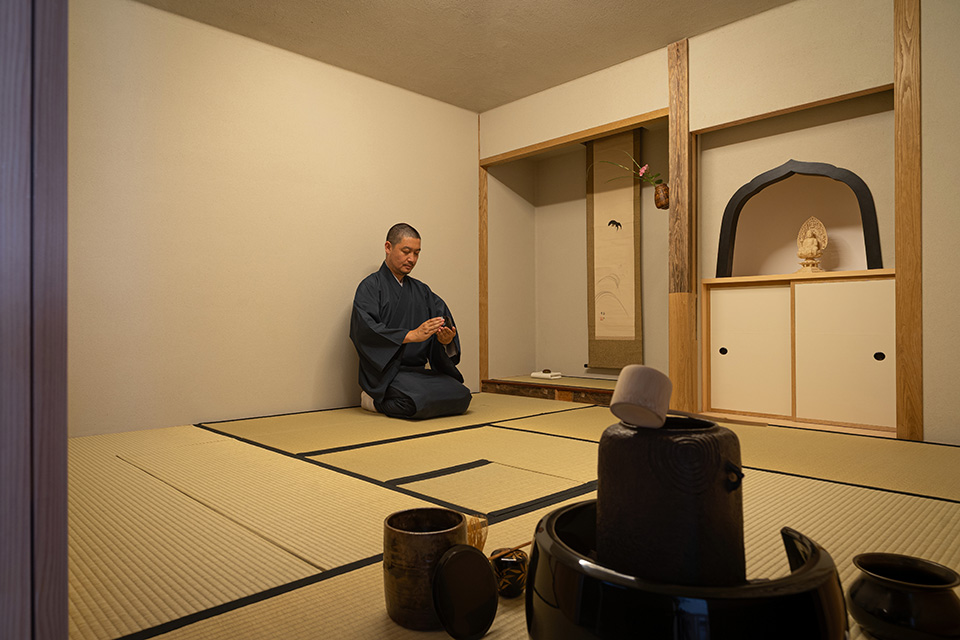 Traditional seiza position
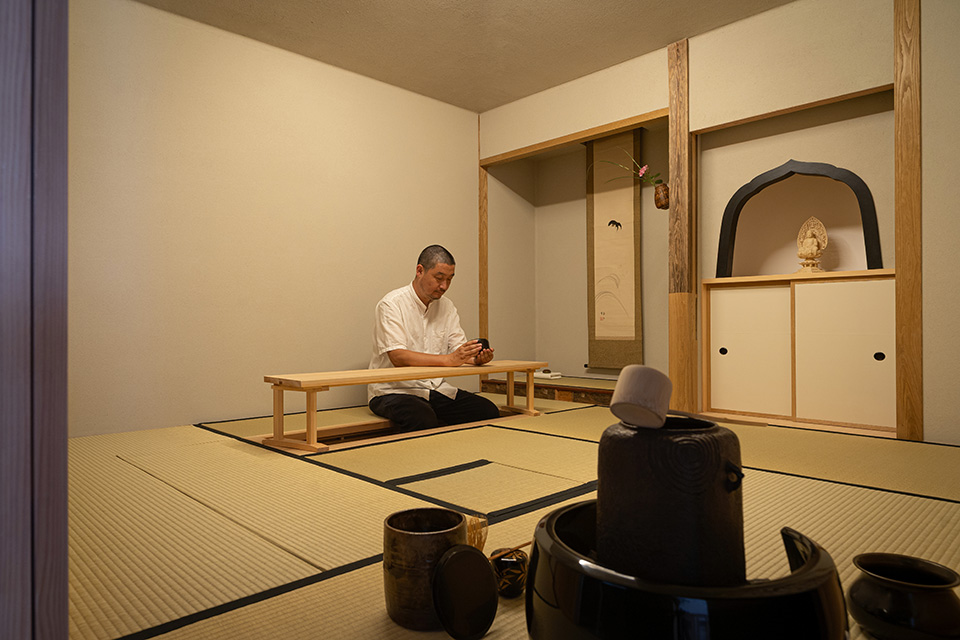 Western-style seating
We can host up to six guests, with chairs and floor cushions available for your comfort.


A Roji Garden Designed by a Kyoto Gardener Inside the Tea Room
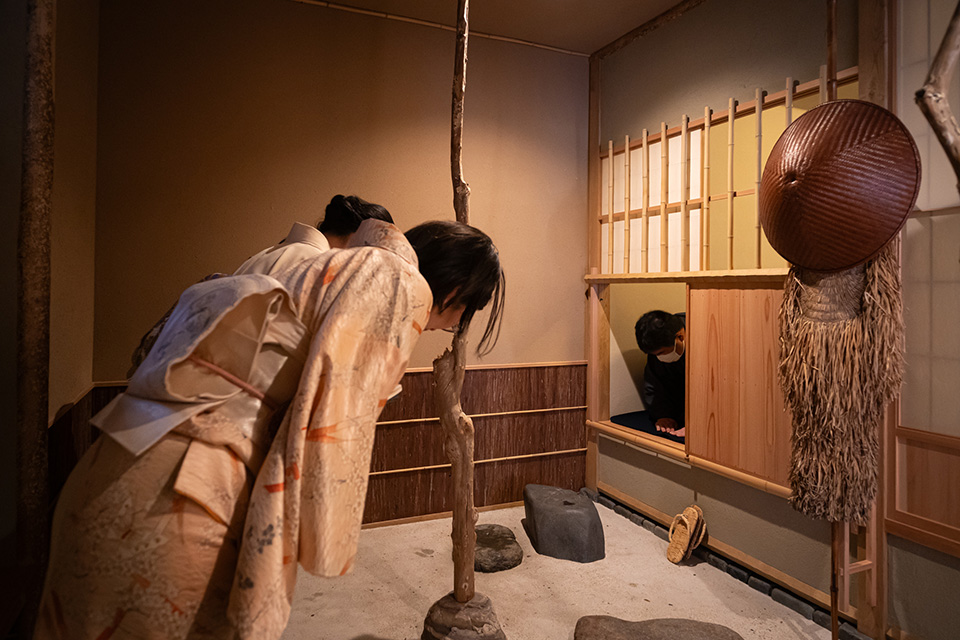
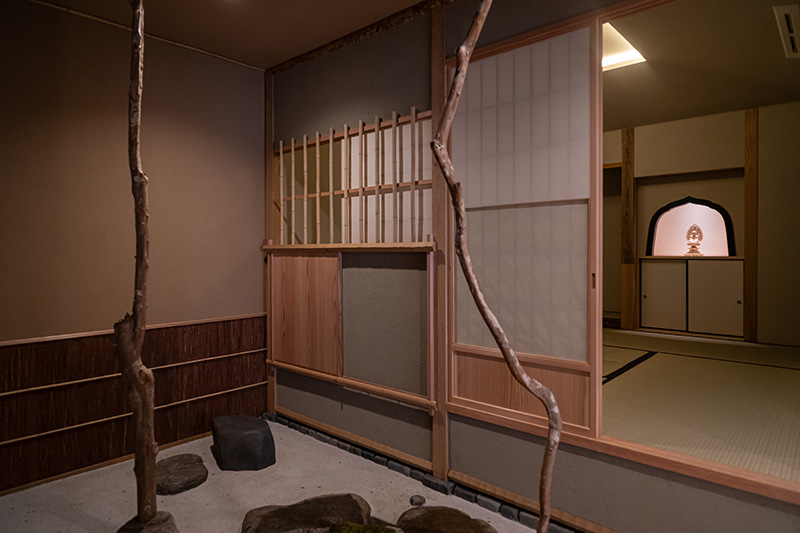
It is quite rare to find a roji garden inside an air-conditioned tea room, but almost every outdoor tea room in Japan is accompanied by one. One of the key differences between a tea room (chashitsu) and a regular Japanese-style room (washitsu) is the presence of this roji garden.
Experiencing the roji, with its many traditional rules and rituals, offers a deeper understanding of Japanese culture. You will notice the gardener’s craftsmanship in every detail, from the stone basin (tsukubai) to the careful arrangement of stones.

The narrow entrance of the tea room, called nijiriguchi, carries a profound significance.
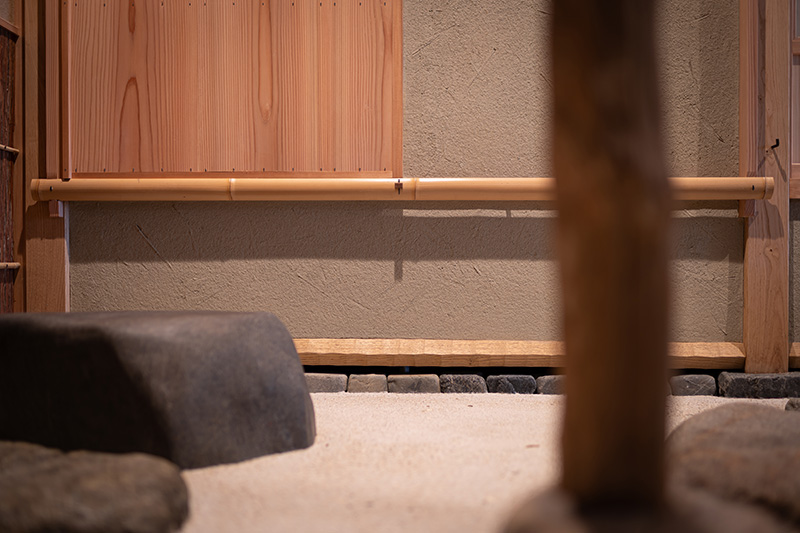
The choice and arrangement of stones reveal the spirit of Japanese handcraft, visible in every detail.


Serving Exquisite Matcha from a Tea Garden Honored by the Imperial Household
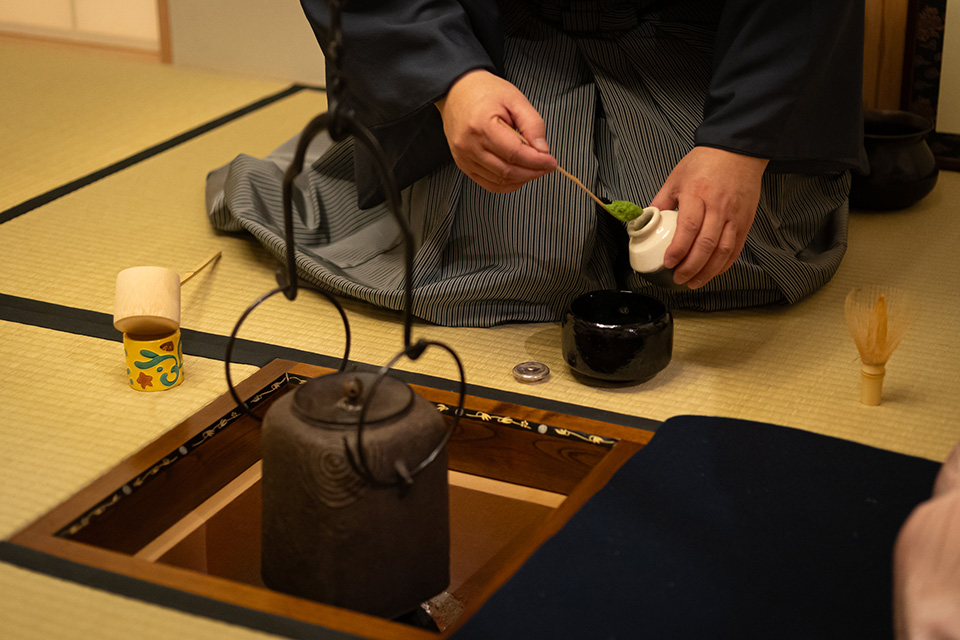
This is a truly rare and precious matcha, seldom available even in Japan. Most tea gardens are located in the southern part of Kyoto, and the matcha we serve comes from a historic tea estate in Kyōtanabe City. For over 350 years, this estate has continued the tradition of carefully hand-picking its tea leaves.
In Japan today, very few tea gardens remain committed to hand-picking, as most rely on machine harvesting. Please savor the refined, full-bodied flavor of this exceptional hand-picked matcha.
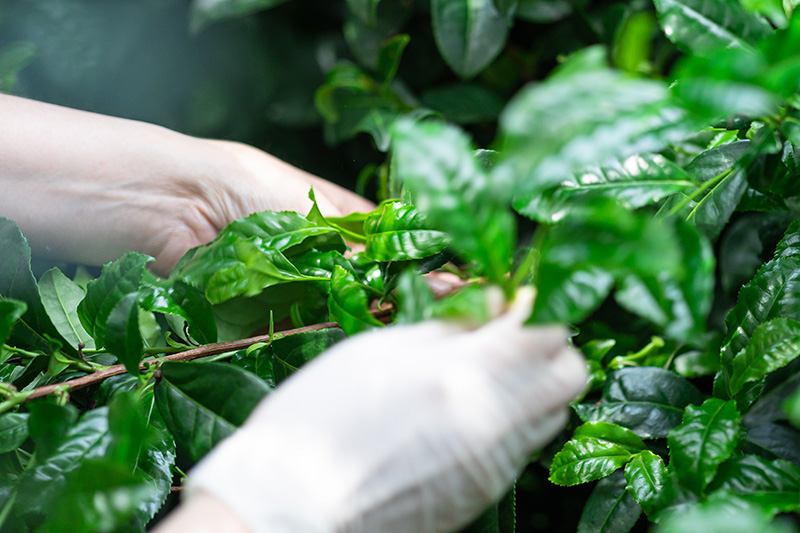
Every single leaf is gently picked by hand with care.
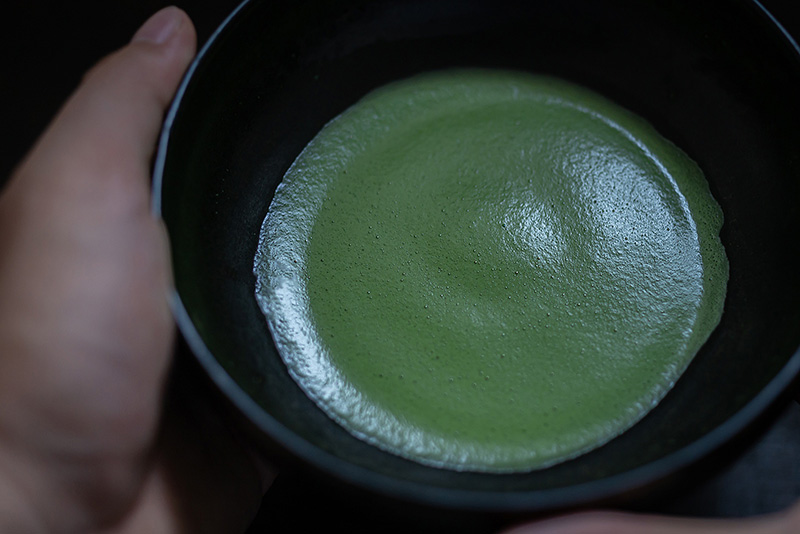
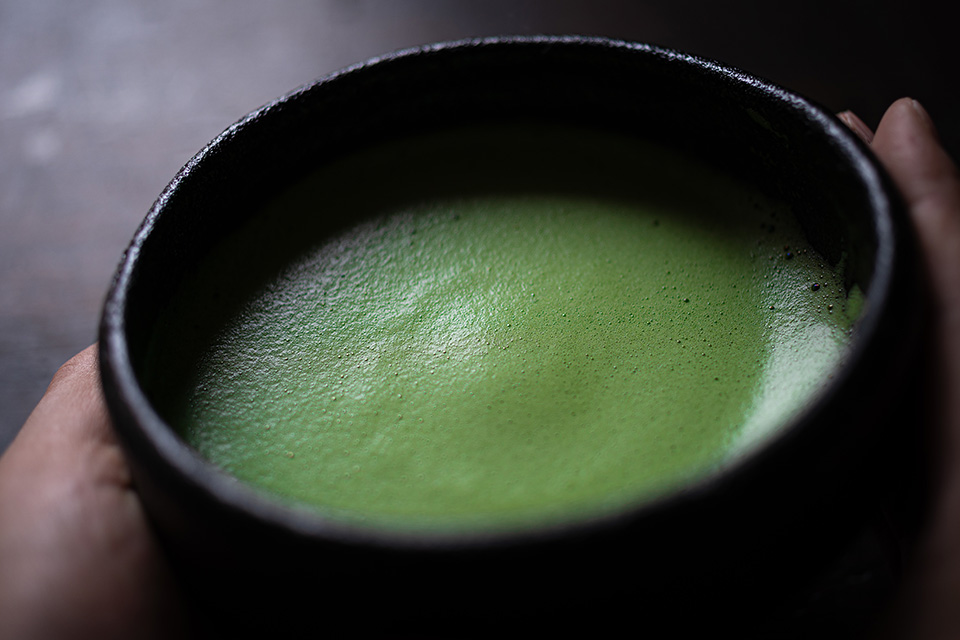
Elegant and smooth matcha, brimming with fragrance, umami, and natural sweetness.


Boiling Water with Charcoal as 500 Years Ago, Quietly Enjoying the Crackling Sparks and the Sound of the Kettle Known as Shofu
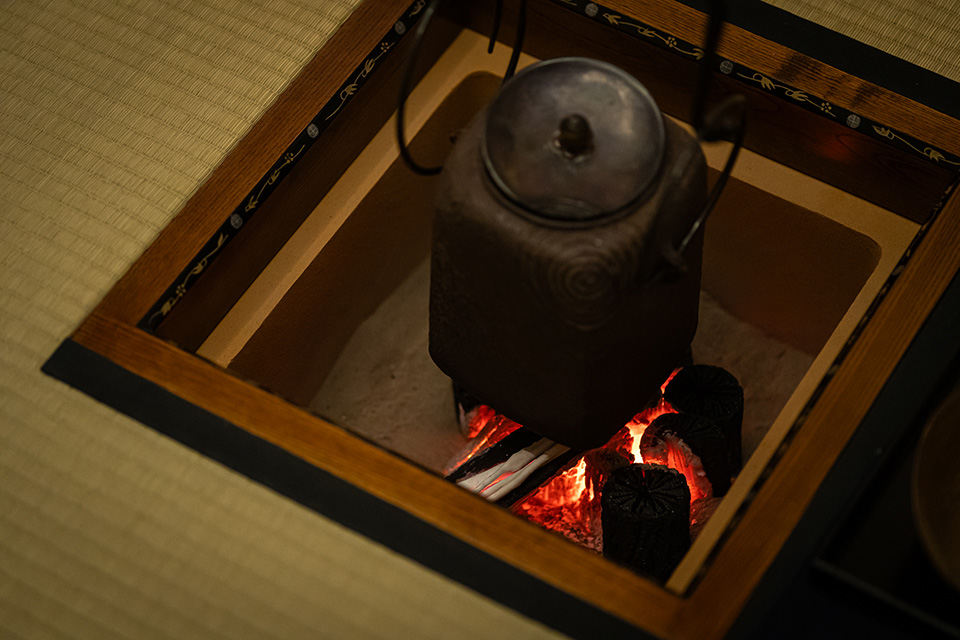
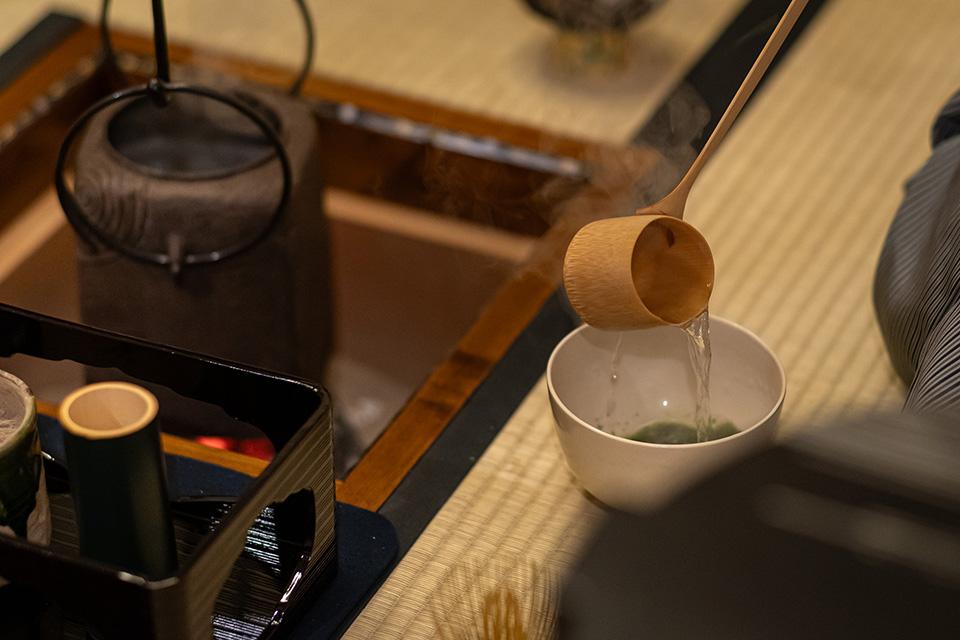
Have you ever heard shofu? It is a sound that can only be produced with charcoal—never with electricity. From May to October, we use the furo (portable brazier), and from November to April, the ro (sunken hearth) to make fire with charcoal.
While the furo can be moved, the ro is built into the center of the tearoom. The hearth is finished with yellow clay by a specialized craftsman called a rodanshi. This clay is known as Inariyama Odo, a very precious earth from the region of Fushimi Inari Taisha—the most popular shrine among international visitors to Kyoto. Why is it yellow? Because the world of tea is deeply intertwined with the philosophy of Yin-Yang and the Five Elements.

A specialized craftsman called a rodanshi finishes it with clay (Inariyama Odo).
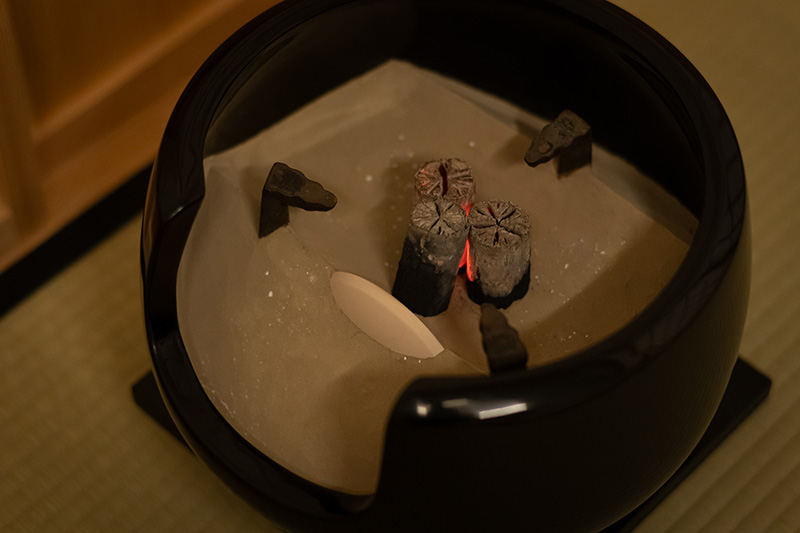
There are charcoals for the furo and the ro; those for the furo are characterized by their smaller size.
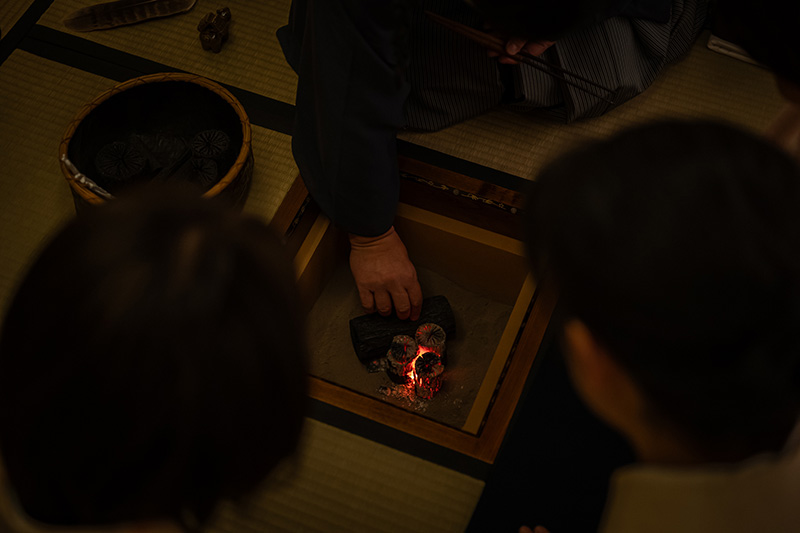
In tea ceremony, the way charcoal is arranged is fixed. Incense is burned at the same time, so you can enjoy the fragrance too. (The charcoal procedure can be chosen as an option.)


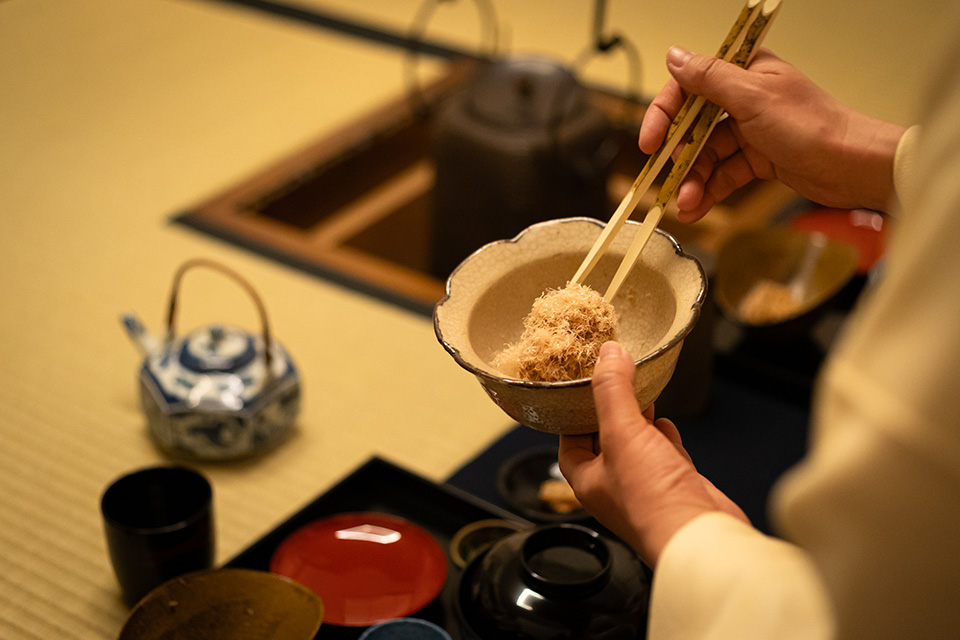
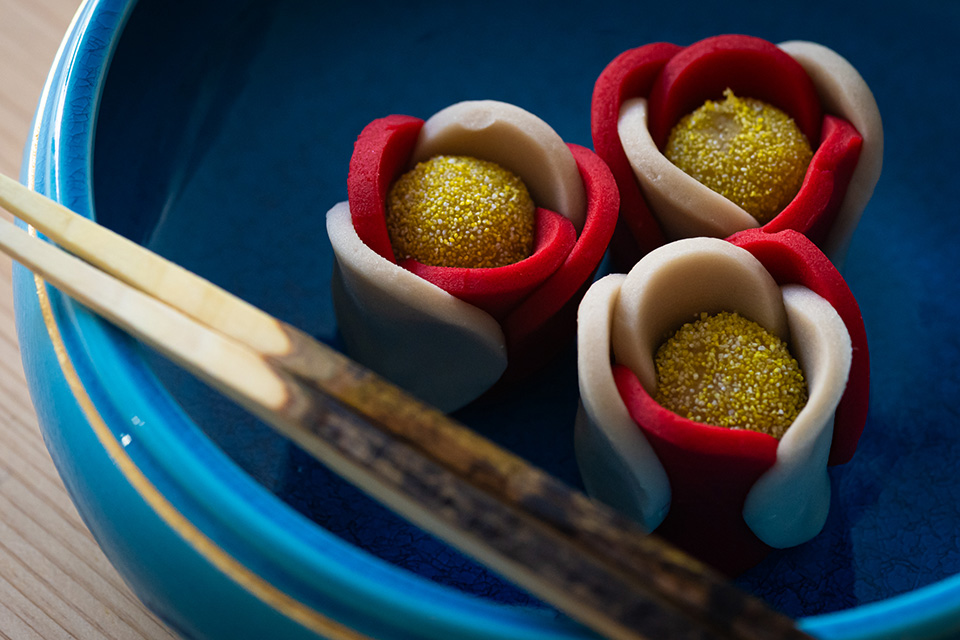
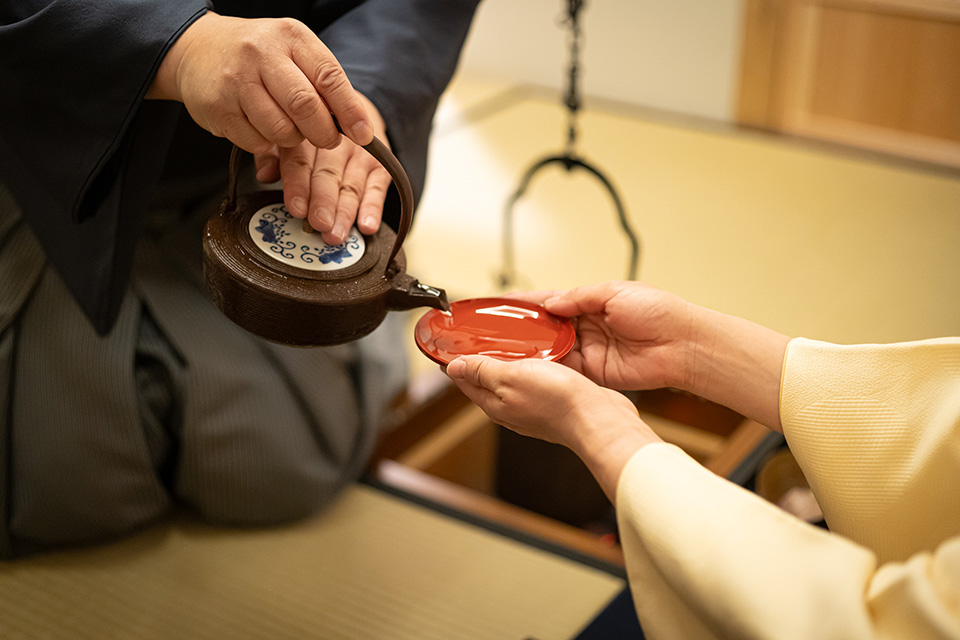
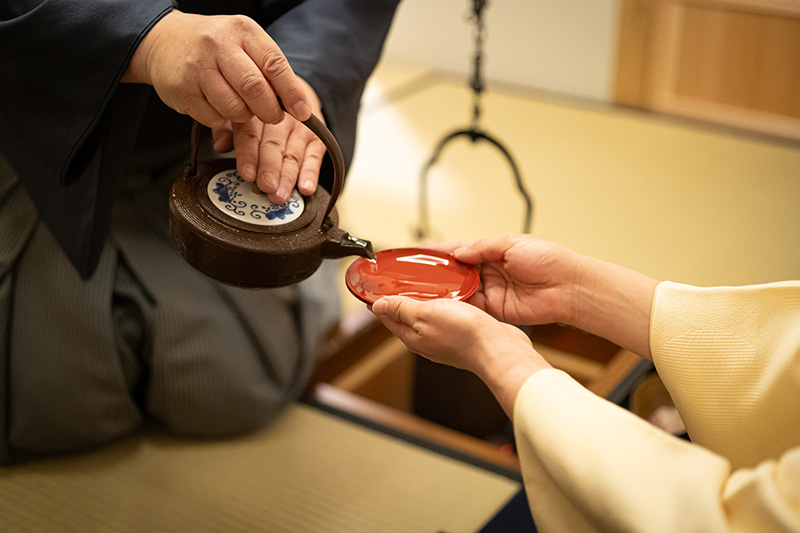
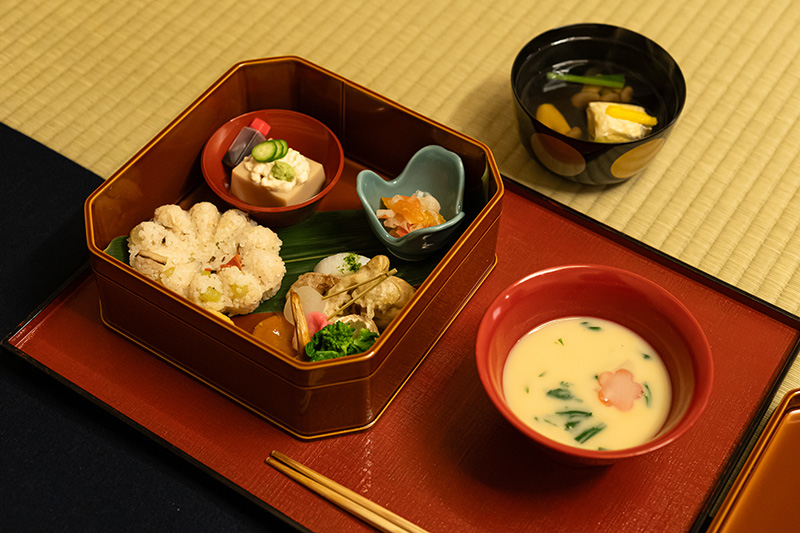
Meal-Inclusive Plans: Light Meal or a Full Chaji (Kaiseki, Charcoal Ceremony, Thick Tea, and Thin Tea) Sake is also included upon request.
Most people imagine thin tea (Thin tea) when they think of matcha in the tea ceremony. However, in its true form, matcha in the way of tea refers to thick tea (Thick tea). The tea gatherings you may have experienced before were likely only for thin tea, representing just one small part of the full practice.
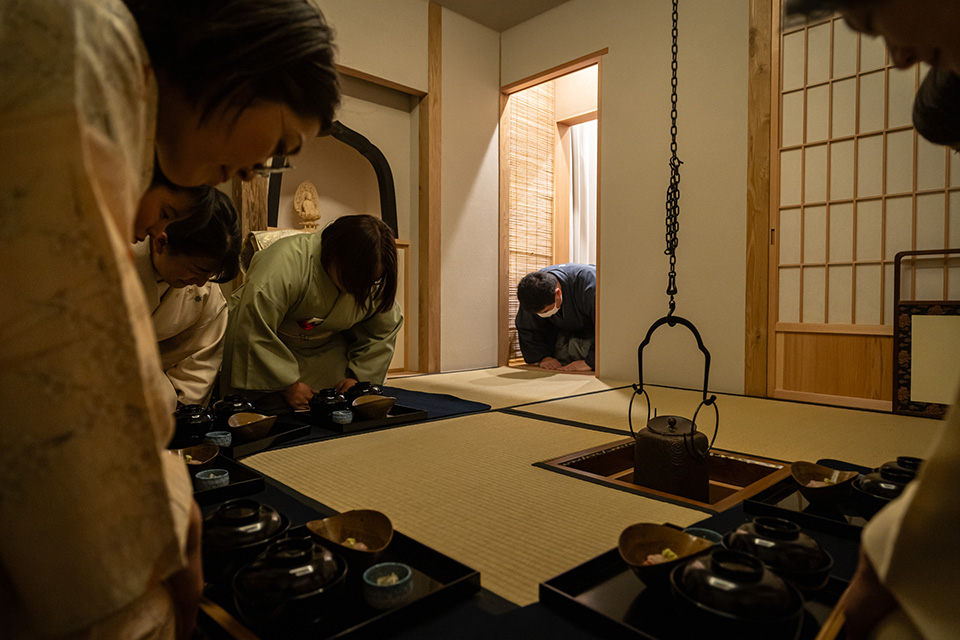
At feel the ZEN, you can experience the complete form of the tea ceremony: a chaji consisting of kaiseki cuisine, the charcoal procedure, thick tea, and thin tea. Depending on the number of participants, the experience lasts about three and a half to four hours. The light meal plan takes approximately two hours.
Every single leaf is gently picked by hand with care.
Elegant and smooth matcha, brimming with fragrance, umami, and natural sweetness.

